Examining Shared Venue Usage Patterns for Golf, Baseball, and Ice Hockey Across Toronto's Public Parks and Arenas
Katja Simmons · Aug 24, 2026

Examining Shared Venue Usage Patterns for Golf, Baseball, and Ice Hockey Across Toronto's Public Parks and Arenas
Toronto maintains an extensive network of public parks and arenas that support golf, baseball, and ice hockey through coordinated scheduling systems managed by the city, and these venues often handle overlapping demands from recreational leagues, school programs, and community groups. Data from municipal records shows that facilities like the ones in High Park and at the North Toronto Memorial Arena experience peak bookings during transition periods when one sport's season winds down and another's ramps up.
Seasonal Shifts in Facility Allocation
City planners track how golf courses in parks transition from summer play to limited fall access while baseball diamonds get repurposed for other activities, and ice hockey takes over indoor arenas from October through March with consistent evening and weekend slots. Researchers at the University of Toronto have documented that shared outdoor spaces see baseball usage drop by roughly 40 percent after August, which frees up maintenance crews to prepare adjacent areas for winter storage or alternative sports setups. This pattern repeats across dozens of sites because the same grounds crews handle multiple fields, and data indicates efficient rotation reduces downtime between seasons.
Overlaps and Booking Trends
Public arenas double as hubs where hockey teams share ice time with other users, yet outdoor baseball and golf maintain separate footprints except when multi-purpose fields allow cross-training sessions during shoulder months. Figures from the City of Toronto parks department reveal that August 2026 bookings for golf reached 85 percent capacity at several east-end courses while baseball diamonds operated at 70 percent, creating windows for shared equipment storage and joint maintenance. Observers note that these overlaps help the city stretch limited resources because one permit system handles requests for all three sports, and administrators adjust allocations based on historical demand rather than fixed schedules.
Take one east-end facility where baseball leagues finish their regular season in late July, after which grounds staff reseed infields and reposition netting to accommodate early golf practice areas, and the same park's arena books ice for hockey clinics that run parallel to any lingering outdoor activity. This approach keeps venues active year-round without major capital investment in new builds.
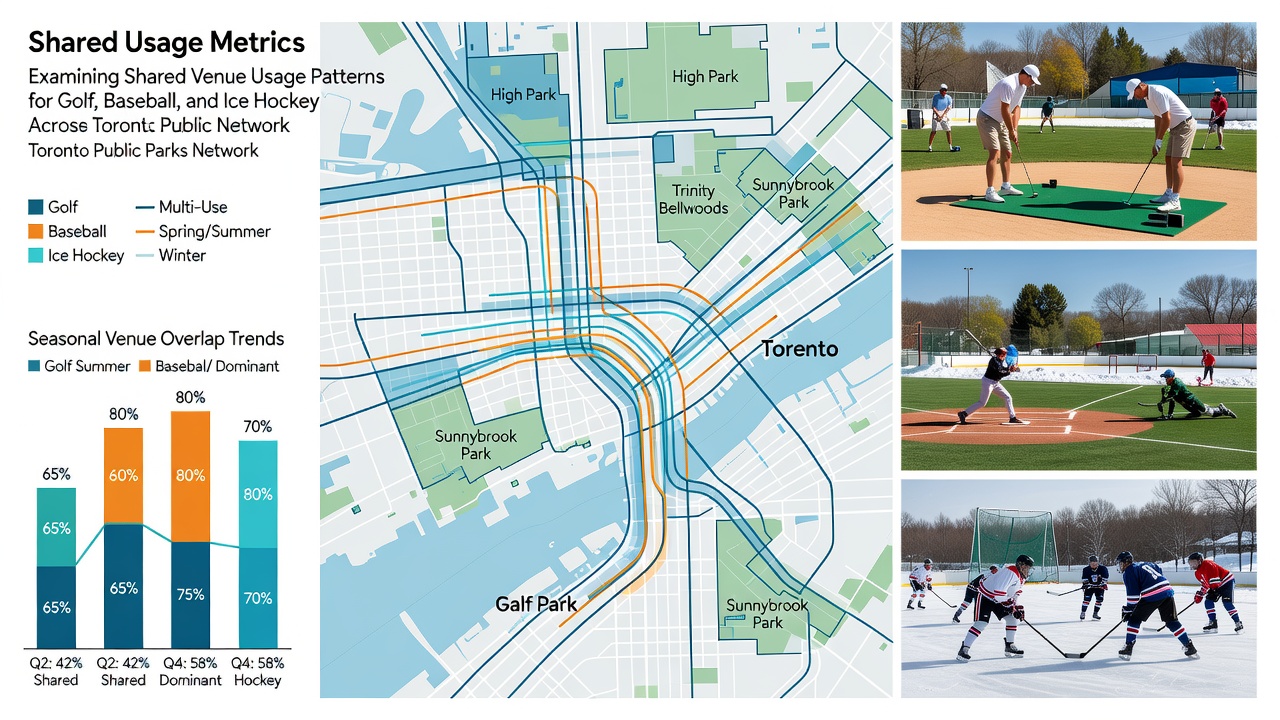
Data Insights from Municipal Records
Usage statistics compiled through the city's online reservation platform show golf receiving the highest number of individual tee-time reservations in spring and early summer, baseball dominating group permits for diamonds from May to July, adn ice hockey claiming the bulk of arena hours once temperatures drop. A 2025 analysis by Ontario recreation researchers found that shared venues reduce per-sport operating costs by 15 to 20 percent compared with dedicated single-use sites because utilities, lighting, and staffing get distributed across activities. Those numbers hold steady because the same electrical and refrigeration systems that support hockey in winter also handle off-season dry-floor events that sometimes include baseball training equipment.
What's interesting is how weather events influence these patterns, since heavy summer rain can cancel baseball games and push teams toward indoor alternatives while golf courses recover faster and reopen within days. City reports indicate that August 2026 maintenance windows were shortened at several parks to accommodate an unusually dry spell that extended both golf and late baseball play, and arena staff used the extra time for equipment checks ahead of the hockey season.
Community Access and Permit Distribution
Permit data illustrates that youth organizations secure the majority of ice slots for hockey while adult recreational leagues fill most golf and baseball reservations, yet the city maintains equity rules that reserve prime weekend hours for public drop-in programs across all three sports. Those who've studied booking logs observe that shared venues allow smaller community groups to access facilities they could not otherwise afford because multi-sport contracts spread administrative fees. Evidence from annual summaries points to steady growth in cross-sport permits, particularly at parks that combine an arena with adjacent fields, because participants can move between activities without changing locations.
Looking Ahead to Facility Planning
Future allocations will likely build on current patterns as the city updates its recreation master plan, and projections through 2030 anticipate continued pressure on arenas during hockey season alongside steady demand for outdoor golf and baseball space in warmer months. Planners already factor in climate trends that may extend playable seasons for baseball and golf, which could further compress transition periods between sports. According to a report from Statistics Canada on urban recreation trends, municipalities like Toronto benefit when venues support multiple sports because overall participation rates rise without proportional increases in infrastructure spending.
Conclusion
Toronto's approach to shared public parks and arenas demonstrates measurable patterns in how golf, baseball, and ice hockey coexist through deliberate scheduling and resource management, and ongoing data collection will continue to refine those allocations. The documented trends from recent years, including activity levels observed in August 2026, provide a baseline for understanding how seasonal demands intersect at these venues across the city.